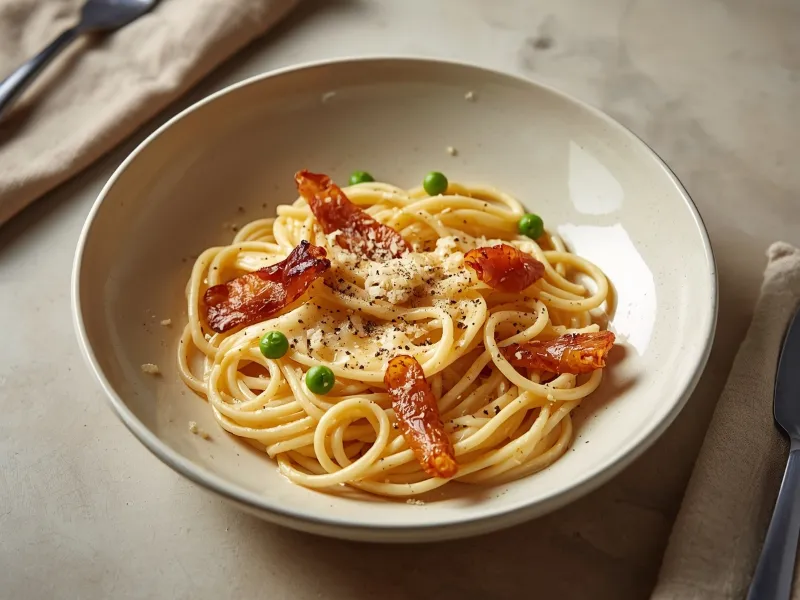
Spaghetti carbonara
Classic Roman carbonara with crisp guanciale, egg yolks, Pecorino Romano and black pepper. No cream: just a silky sauce made off the heat with pasta water.
- Prep
- 5 min
- Cook
- 15 min
- Serves
- 2
- Per serve
- 820 kcal
Ingredients
Method
Bring a large pot of water to a boil (an electric kettle speeds this up) and salt it lightly, since the guanciale and Pecorino are already salty. Cut the guanciale into thin strips while it heats.
In a large bowl, whisk the egg, yolks, Pecorino and pepper into a thick, smooth paste.
Cook the spaghetti for 1 minute less than the package says, usually about 9 minutes. Meanwhile, put the guanciale in a cold large skillet, set it over medium heat and cook, stirring now and then, until the fat has melted out and the edges are crisp and golden. Turn off the heat.
Scoop out a mugful of pasta water. Whisk 2 tbsp of it into the egg mixture to loosen and warm it. Use tongs to lift the spaghetti straight into the skillet and toss it in the guanciale fat. Let the pan sit off the heat for 30 seconds so it stops sizzling.
Pour the egg mixture over the pasta and toss fast and constantly, adding splashes of pasta water, until the sauce turns creamy, glossy and clings to every strand. The heat of the pasta cooks the eggs into the sauce; it should never look scrambled.
Serve right away, topped with more Pecorino and a good grind of black pepper.
Tips
- The pan must be off the heat when the eggs go in. If the sauce is still runny after a minute of tossing, set the pan over the lowest heat for a few seconds at a time, tossing nonstop, until it thickens.
- Guanciale (cured pork cheek) is traditional. Pancetta is the next best thing; thick-cut bacon works too and adds a light smoky flavor.
- There's no cream in authentic carbonara: the creaminess comes from yolks, cheese and starchy pasta water. Use pasteurized eggs if you're cooking for anyone who should avoid lightly cooked eggs.